
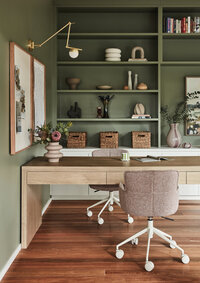


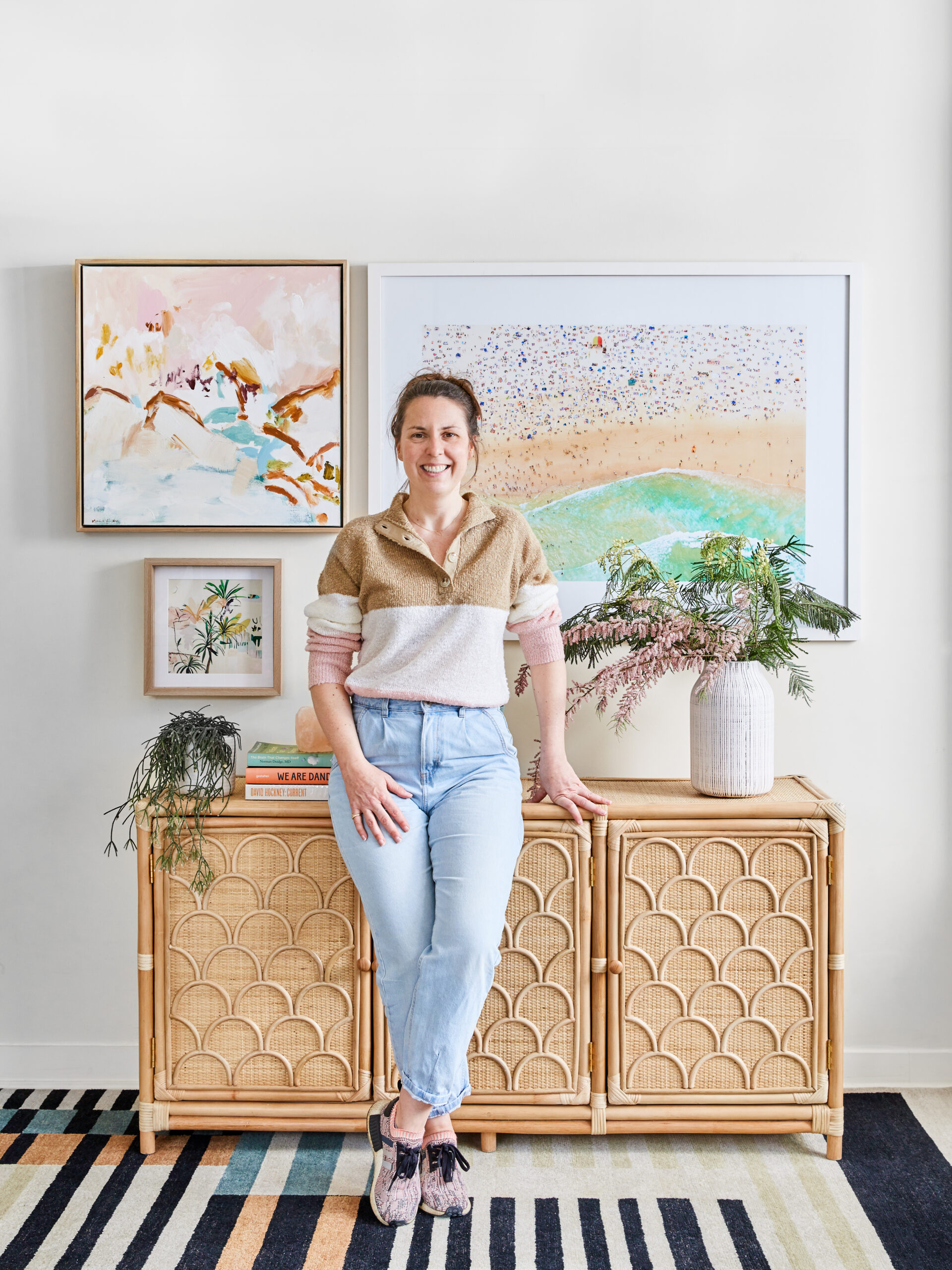

A compact gallery wall demonstrates balanced spacing and proportion above furniture.
Hanging artwork may seem straightforward, yet the way art is positioned has a significant impact on how a space feels and functions. Proportion, height, spacing and relationship to furniture all influence whether a room feels cohesive and visually balanced or disconnected and cluttered.
As an interior designer, I see artwork as an integral layer of the overall design. When hung thoughtfully, art anchors a space, reinforces scale and creates natural focal points. Whether you’re installing a single statement piece or building a layered gallery wall, these proven principles will help your artwork feel intentional, refined and beautifully resolved.
The 150cm Rule: The Key to Balance
One of the most common mistakes when hanging artwork is positioning it too high on the wall. For optimal visual balance, the centre of your artwork should sit approximately 150–155 cm from the floor. This aligns with the average eye level and creates a comfortable viewing experience that feels natural within the space.
This guideline is widely used in galleries and museums because it works consistently across different wall heights and room proportions.
Tip: Always measure from the floor to the centre of the artwork itself, not to the hanging hook or wire.
Hanging Art Above Furniture: The Perfect Proportions
When hanging artwork above furniture such as a sofa, sideboard or console, proportion becomes critical. As a general rule, artwork should measure roughly two-thirds the width of the furniture beneath it. This creates visual balance without overpowering the piece below.
Allow approximately 20–25 cm between the top of the furniture and the bottom of the artwork. This spacing gives the artwork room to breathe and prevents the arrangement from feeling cramped or disconnected.
In some layouts, this may mean slightly adjusting the 150–155 cm rule. Visual harmony always takes priority over rigid measurements.
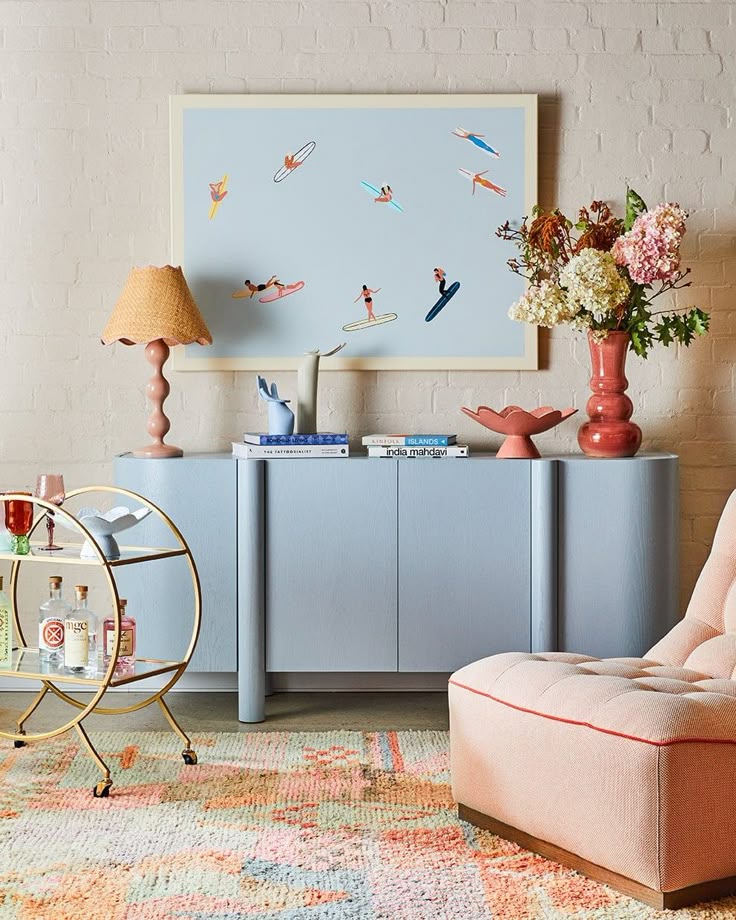
Photography: Greenhouse Interiors
Correct artwork height above furniture creates visual balance and cohesion.
Creating a Gallery Wall: Curating a Cohesive Collection
Gallery walls are an excellent way to showcase multiple pieces while adding personality and depth to larger wall areas. The key is to treat the entire arrangement as a single composition rather than a collection of individual frames.
Select artworks that relate through colour, tone, theme or framing. You can maintain consistency with matching frames or intentionally mix sizes and mediums for a more layered, collected feel. Combining paintings, sketches and photography adds visual richness and individuality.
Start by positioning the largest piece centrally and build outward. For balance, heavier visual pieces tend to work best lower in the arrangement, with lighter elements toward the top. Maintain 5–12 cm spacing between frames to keep the layout visually connected without crowding.
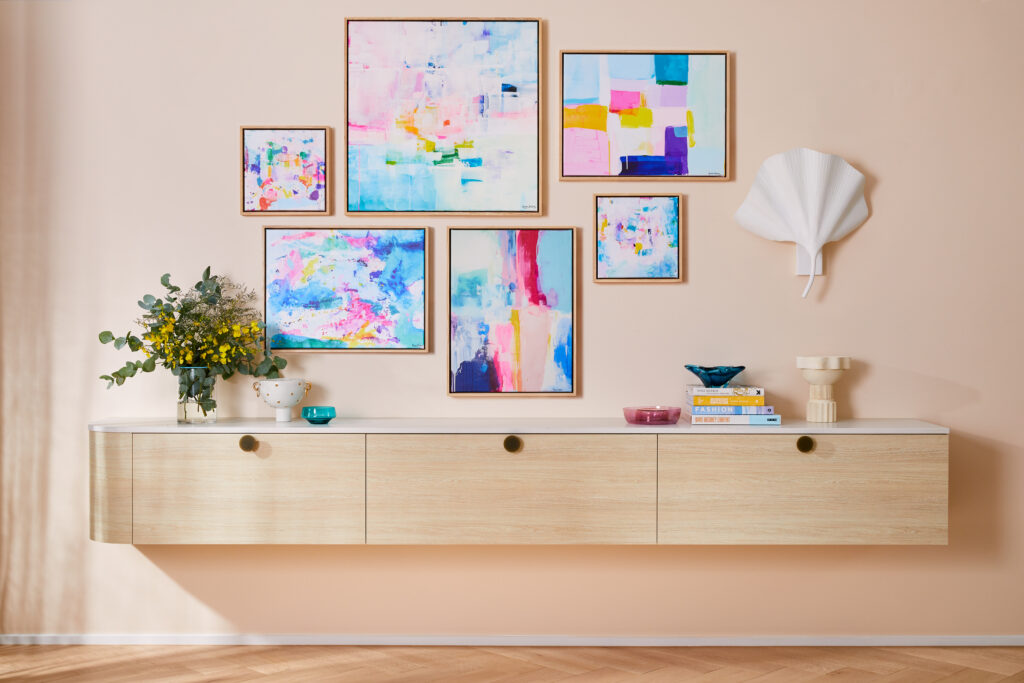
Photography: Stephanie Rooney
Artist: Kirsten Jackson Gallery
Proven Tips for Hanging Artwork Like a Pro
Preparation prevents unnecessary wall damage and ensures your layout feels considered before installation.
- Map it out first – Use painter’s tape to outline frame placement directly on the wall.
- Test with paper templates – Cut paper to match frame sizes and move them around until the composition feels balanced.
- Lay it out on the floor – Arrange pieces on the floor first to refine spacing and hierarchy.
- Choose the right hardware – Heavier pieces require appropriate anchors or hooks for safety and longevity.
- Use a stud finder – Essential for larger or heavier artwork to ensure secure fixing.
What If the Standard Layout Doesn’t Suit Your Space?
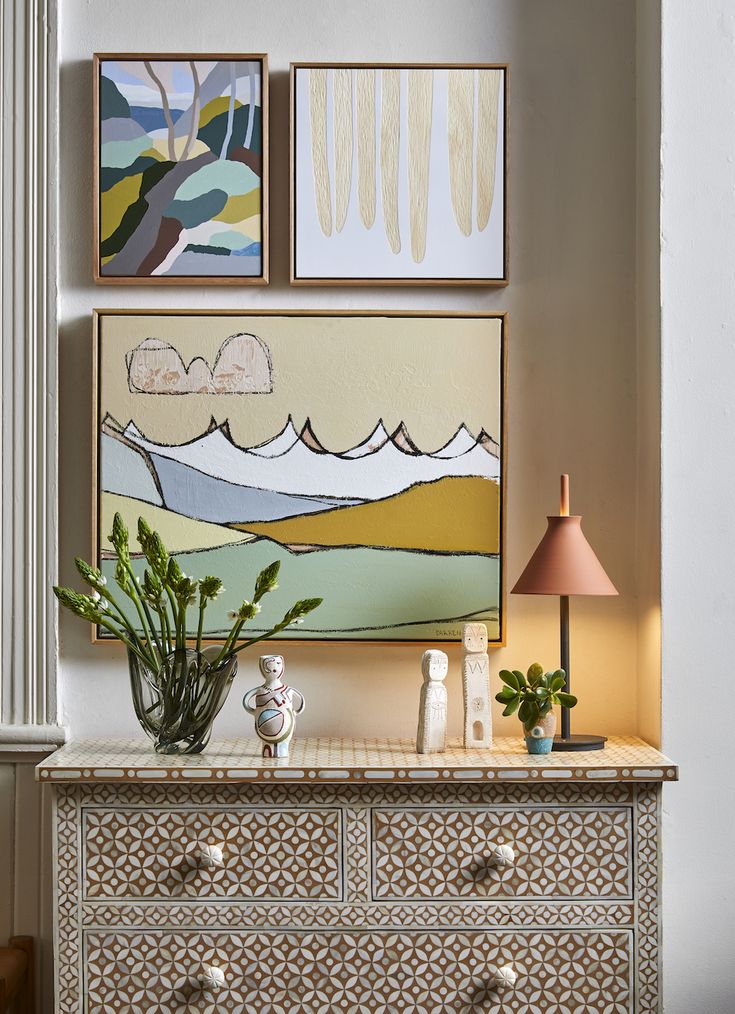
Not every wall suits a symmetrical or grid layout. Asymmetrical gallery walls can feel relaxed and contemporary when executed thoughtfully. Anchor the composition with one larger piece and layer smaller works around it with varied spacing and heights.
The key is maintaining visual weight balance rather than strict alignment.
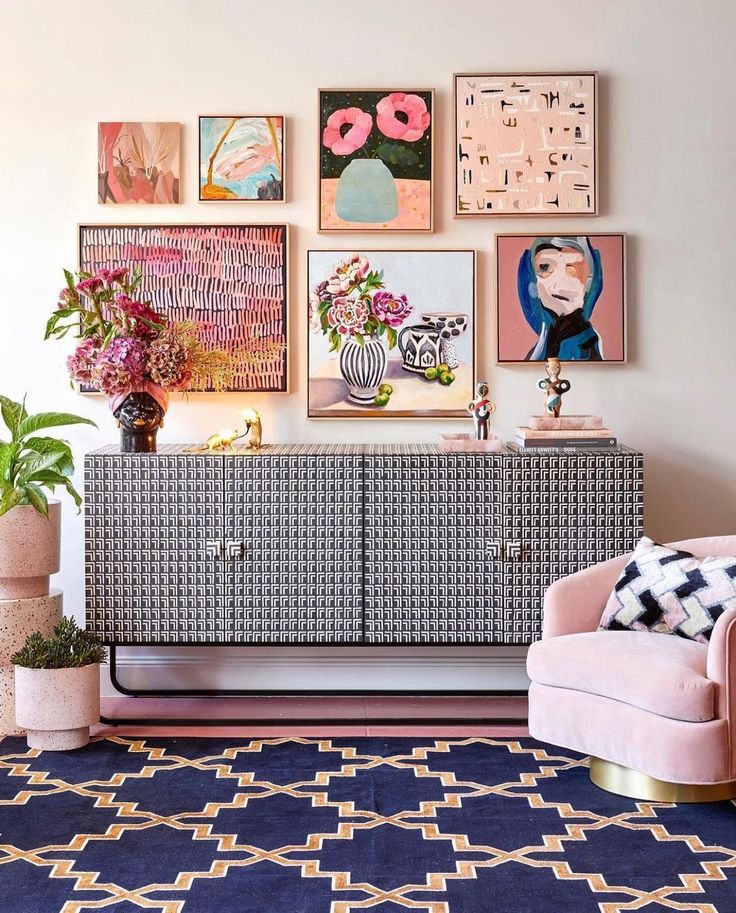
Photography: Fenton & Fenton
How Do You Choose Artwork That Reflects Your Personal Style?
Consider colours, subjects and moods that naturally resonate with you. Visiting galleries, browsing online collections and saving inspiration can reveal recurring preferences.
Creating a mood board helps visualise how artwork integrates with your existing finishes, furniture and lighting. This prevents impulsive purchases and supports cohesive decision-making.
You can also explore real project examples, mood boards and curated interiors via my Style Sourcebook profile, which showcases how different artwork styles translate into beautifully resolved spaces.
Does Artwork Selection Change by Room Type?
Yes. Artwork should respond to the function and emotional tone of each room.
- Living areas often suit expressive or statement pieces.
- Bedrooms benefit from softer, calming imagery.
- Kitchens and dining spaces can carry more colour and energy.
The goal is alignment between the room’s purpose, scale and atmosphere.
Need Help Curating the Right Artwork for Your Home?
Hanging artwork correctly is only part of the equation. Selecting pieces that align with your architecture, layout, lighting and lifestyle requires a trained design eye.
As part of our end-to-end furnishing services, I provide professional art curation to ensure each piece enhances the overall design, scale and flow of your home. From sourcing to placement, every detail is considered to achieve a refined and cohesive outcome.
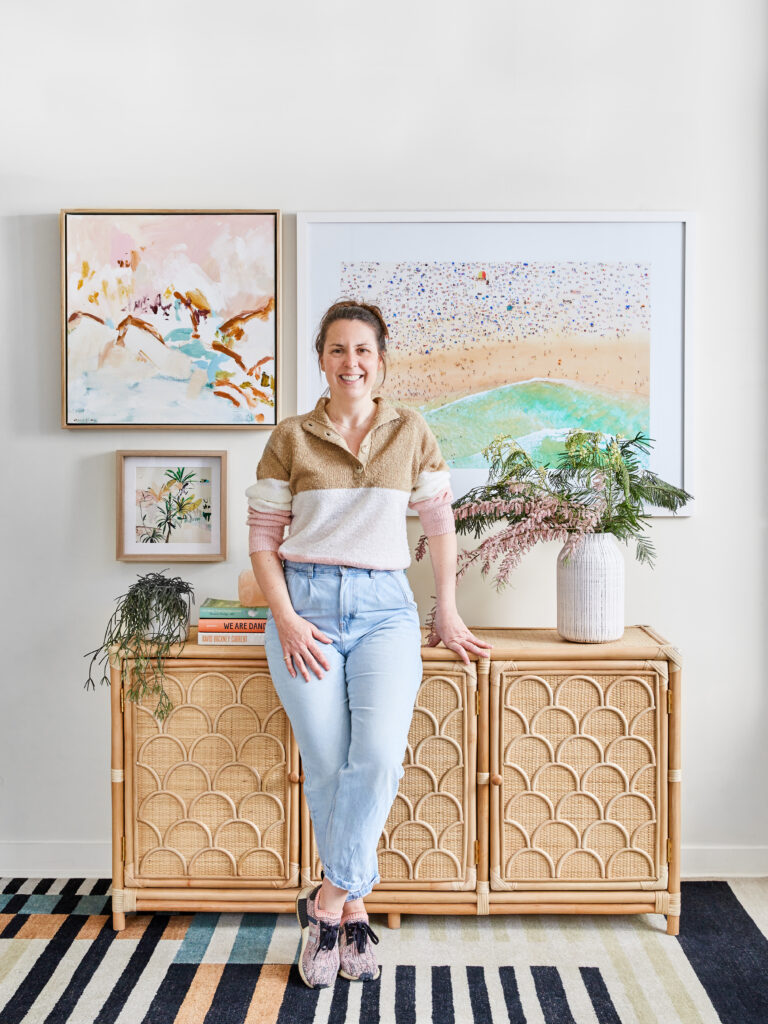
Photography: Stephanie Rooney
Artist: Kirsten Jackson Gallery
Ready to Elevate Your Walls?
If you’d like expert guidance selecting and positioning artwork for your home, our tailored design services remove the guesswork and deliver clarity at every stage.
Book your complimentary discovery call via the link below to discuss your space and explore how we can support your project.
👉 Book Your Complimentary Discovery Call
